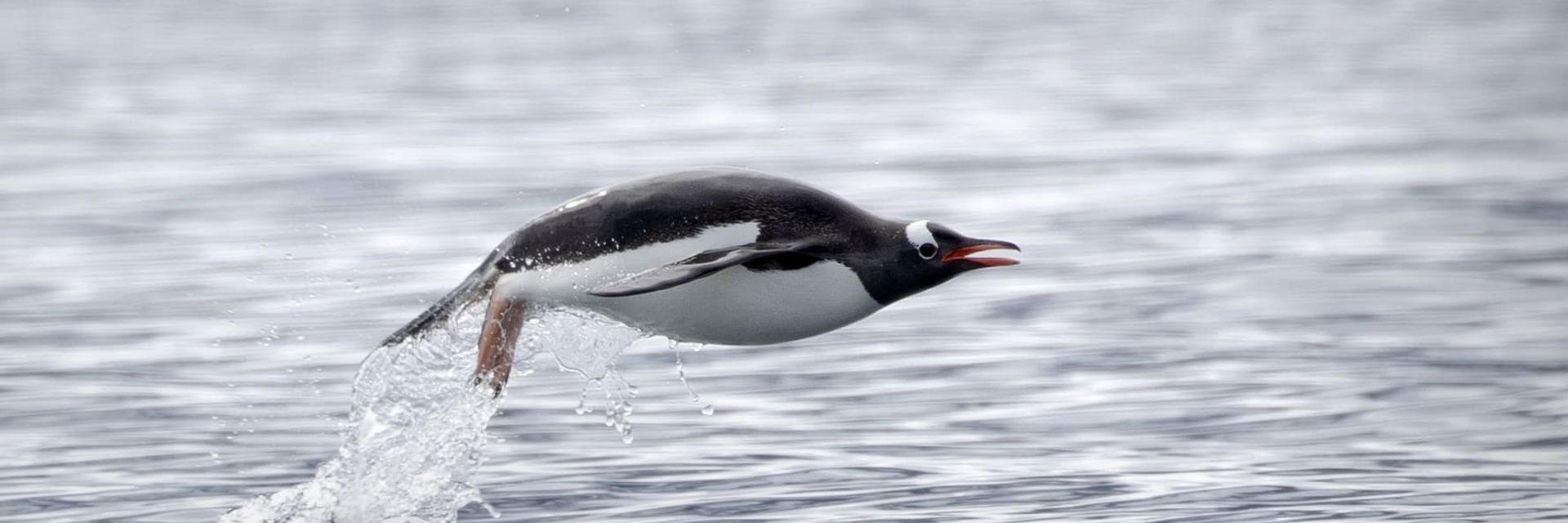
Antarctica is one of the most photogenic destinations on earth. Here's how to prepare for capturing penguins, icebergs, and whales on an expedition cruise.
Few destinations reward a camera the way Antarctica does, from the graphic scale of tabular icebergs to the constant motion of penguin colonies along the shoreline, and a little preparation goes a long way toward coming home with images that do the trip justice.
Photographing Icebergs and Ice Formations
The Peninsula's tabular icebergs and sculpted ice arches offer some of the most dramatic scenery on the trip, and Zodiac cruises specifically built around slow, close passes are usually the best way to capture them, particularly in the soft light of early morning or evening.
Ice reflects and refracts light in ways that can trick a camera's automatic exposure, so shooting in manual or using exposure compensation to avoid blown-out highlights on bright white ice is one of the most useful technical adjustments to make before the trip.
Wildlife Photography Tips
Getting strong penguin and seal images is less about long lenses and more about patience sitting quietly at a respectful distance often brings the animals closer on their own terms, since guidelines already require guests to maintain distance rather than approach wildlife directly.
A mid-range zoom lens, somewhere around 100-400mm, tends to cover most wildlife shooting situations on a typical landing, without the weight and bulk of the longest telephoto lenses used for more distant subjects elsewhere.
Whales and Fast-Moving Subjects
Humpback and minke whales surfacing near Zodiacs move quickly, so a faster shutter speed and staying ready between briefings pays off more than any single piece of gear continuous autofocus and burst shooting mode both help capture the brief surfacing window.
Whale encounters are inherently unpredictable, so keeping a camera readily accessible rather than packed away during Zodiac cruises is often the difference between capturing the moment and missing it entirely.
Gear Considerations for Cold and Moisture
Batteries drain faster in cold conditions, so carrying spares kept warm inside a jacket pocket is a simple fix, and a rain cover or dry bag is essential protection against sea spray during Zodiac landings and cruises.
Composing for Scale
Because Antarctica's landscapes are so vast, including a human or Zodiac element in wider shots often communicates the scale far more effectively than a landscape shot alone a detail many first-time visitors don't think to do until partway through the trip.
A little preparation on gear and technique goes a long way toward images that capture what makes Antarctica so visually overwhelming in person.
Related Reading
• Antarctica Wildlife Guide: What You'll See and When (existing blog post)
• Expedition Cruise Packing List: What the Guides Actually Bring (existing blog post)
• What Is Antarctica Really Like? Life, Isolation & Surprising Facts (new article in this batch — suggested slug)
• Antarctica Ship Size Guide: Why Passenger Count Changes Your Trip (new article in this batch — suggested slug)
• How Many Days Do You Need in Antarctica? Comparing 8-, 10- and 14-Day Itineraries (new article in this batch — suggested slug)
Looking for the best Antarctica cruise packages tailored to your budget? Expedition Experience specializes in small-ship expeditions and can help you find exclusive deals, upgrades, and personalized itineraries. Explore available expeditions and start planning your journey today
More Field Notes
Iceland Circumnavigation
Reykjavik, Iceland